

“For rural children, work was at the top of the triangle, followed by school, and only then came play… Play wasn’t a luxury—it was a survival skill. Children turned goats, chickens, and old carts into their playground.”
–Pamela Riney-Kehrberg
On This Episode
Historian Dr. Pamela Riney-Kehrberg joins us to discuss her book Childhood on the Farm: Work, Play, and Coming of Age in the Midwest. We explore what life was like for farm kids in the 19th and 20th centuries—balancing hard work, scarce play, and limited school opportunities.
Dr. Riney-Kehrberg shares stories of rural youth responsibility, one-room schoolhouses, early examples of challenges that rural teachers faced, and how older students often became the best teachers. We reflect why many farm children left for the city, the lessons rural education holds for today, and how creativity, independence, and intergenerational learning shaped these young lives—and still can.
What You’ll Learn in this Episode
- How rural childhood shaped identity, independence, and creativity
- The role of one-room schools and student-led teaching
- Why farm kids left—and what we’ve lost and gained in the process
- The emotional toll on rural teachers and the “Big boy” problem
- Lessons rural education history holds for today’s learner-centered schools
- How to reconnect with your community’s hidden stories
“Older kids teaching younger kids—because when you teach something, that’s when you really learn it.”
-Pamela Riney-Kehrberg
Questions for Further Discussion
- What lessons from the history of rural childhood and rural schools still apply today?
- How can older students support younger learners in modern classrooms?
- What does student independence look like in a 21st-century rural school?
- How can we honor local histories while building innovative schools?
- What responsibilities did children have historically, and how does that compare to today?
About Pamela Riney-Kehrberg
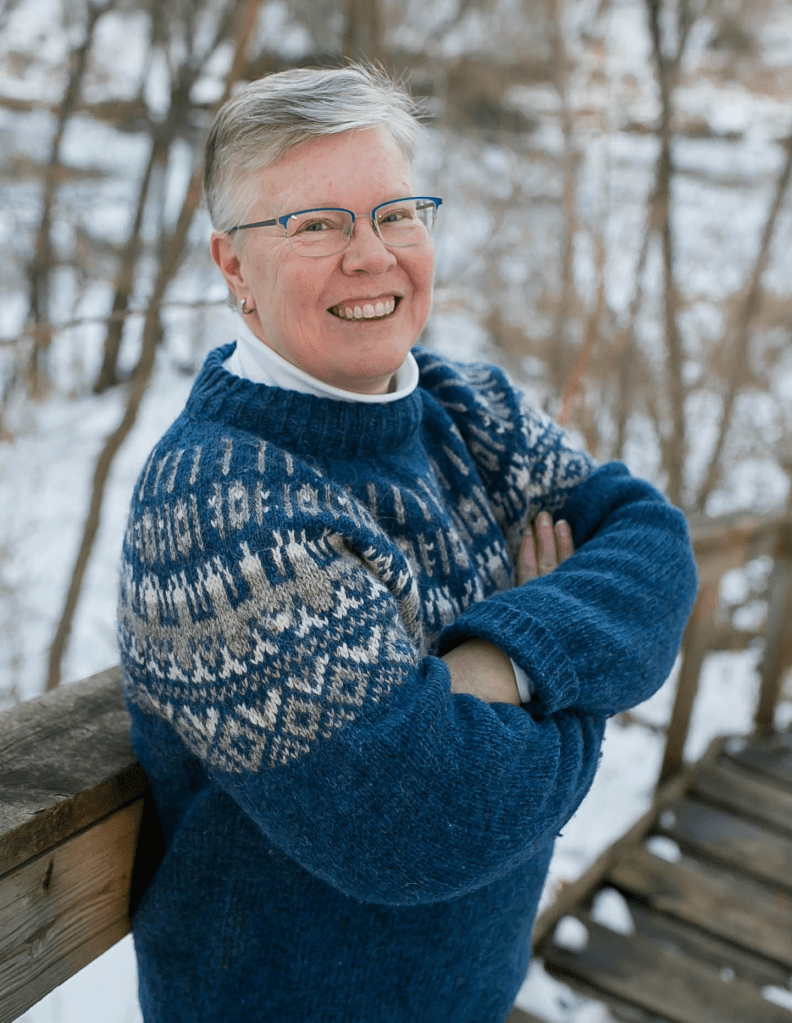
Dr. Pamela Riney-Kehrberg is a Professor of History at Iowa State University, where she coordinates the doctoral program in Rural, Agricultural, Technological, and Environmental History. A former president of the Agricultural History Society, Dr. Riney-Kehrberg has authored several notable books on the history of rural America, including Rooted in Dust: Surviving Drought and Depression in Southwestern Kansas (Kansas, 1994) and Childhood on the Farm: Work, Play and Coming of Age in the Midwest (Kansas, 2005).
I had the pleasure of meeting Dr. Riney-Kehrberg through my participation in The Rural Experience in America, a three-year grant program from the National Council for History Education (NCHE) in partnership with the Library of Congress. This program aimed to amplify rural stories by connecting school educators with public historians, and Dr. Riney-Kehrberg was one of its inspiring collaborators. Along with my community partner, Sue Scott from the Western Illinois Museum, I witnessed firsthand her dedication to preserving and sharing the complexities of rural history. Her passion for uncovering these narratives continues to influence educators, historians, and communities alike.
Resources from Our Conversation
- 📘 Childhood on the Farm: Work, Play, and Coming of Age in the Midwest by Dr. Pamela Riney-Kehrberg
- 🎙️ Riney-Kehrberg’s profile and publications at Iowa State University History Department
- 🎧 NCHE Rural Experience in America – Information about the program that introduced me to Dr. Riney-Kehrberg. You can also listen to the Rural Experience in America Podcast to learn more about the public history projects
- 📰 Library of Congress Teaching with Primary Sources – Access primary sources on American rural life
- Exploring Rural Identity and History with Dr. Pamela Riney-Kehrberg – Our previous episode from Dr. Riney-Kehrberg
- Forgottonia Project Facebook Page

