
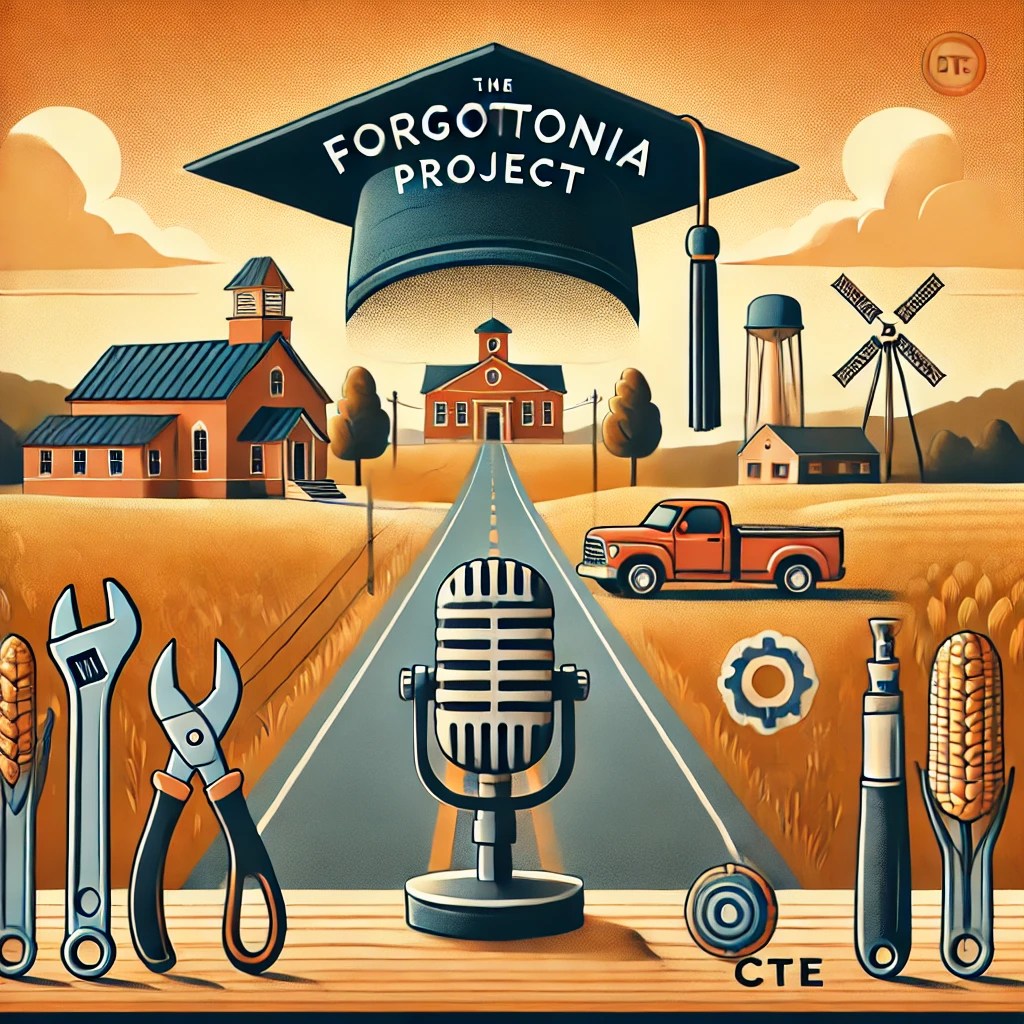
“Rural schools may lack big-city resources, but they have something just as powerful—strong community ties, flexibility to innovate, and educators who wear many hats to make learning meaningful.”
On This Episode
We sit down with John Glasgow, Program Director of the Rural CTE Project (in partnership with The Association of Illinois Rural and Small Schools – AIRSS – and the Seymour Center for Rural Education at Western Illinois University of Illinois) to discuss the Rural Illinois CTE Project and how it’s working to close equity gaps in Career and Technical Education (CTE) across the state.
What you’ll Learn in this Episode
- 1. Rural CTE Needs a More Diverse Program Offering: Many rural schools primarily offer agriculture-based CTE programs, while fields like healthcare and education—critical rural job sectors—are often underrepresented. Expanding these options is key to meeting community workforce needs.
- 2. Teacher Shortages Are a Major Barrier: Finding and retaining specialized CTE instructors is a major challenge. Many skilled professionals can earn more in private industry than in education, making recruitment difficult.
- 3. Transportation Issues Limit Student Opportunities: The long distances between rural schools and hands-on learning sites make access difficult. Addressing this issue is crucial for expanding CTE participation.
- 4. Collaboration is a Key Solution: Pooling resources among districts, expanding statewide entrepreneurship programs, and advocating for better funding are effective ways to strengthen CTE in rural communities.
- 5. Rural Schools Are Centers for Innovation: Despite systemic challenges, rural schools have advantages: they are flexible, deeply connected to their communities, and able to quickly adapt. With the right support, they can lead the charge in reimagining CTE.
Meet Our Guest: John Glasgow

John Glasgow grew up in Monmouth, Illinois, where he initially believed success meant leaving his rural roots behind. Over time, he realized the value of rural communities and dedicated his career to advocating for equitable education. As Associate Director of AIRSS, he works closely with schools, policymakers, and educators to improve access and funding for rural education, particularly in CTE.
“Rural schools aren’t just educating students; they’re preparing the next generation of leaders, business owners, and community builders. CTE isn’t an alternative—it’s essential for ensuring students see a future in their own communities.”
Questions to Continue the Conversation
- What are some of the biggest barriers rural schools face in providing diverse CTE opportunities?
- How can rural communities collaborate to expand CTE offerings despite resource limitations?
- What role should state and local governments play in ensuring equitable access to CTE for rural students?
- How can we shift the perception of CTE from an alternative to an essential part of education for all students?
- What innovative CTE programs or partnerships have you seen work well in rural areas?
Sources to Explore
- The Association of Illinois Rural and Small Schools
- The Rural IL CTE Project Portal
- Seymour Center for Rural Education at Western Illinois University of Illinois
- Illinois State Board of Education (ISBE) – CTE Resources
- Rural Schools Collaborative
- CTE on the Frontier: Rural CTE Strategy Guide
- This Ain’t Your Grandfather’s CTE: Revitalizing Rural Schools through Career Technical Education
- CEO (Creating Entrepreneurial Opportunities) Program
- National Rural Education Association (NREA)
- Pathways to Prosperity: Meeting the Challenge of Preparing Young Americans for the 21st Century
 The Forgottonia Project