
“Since 2005, the U.S. has lost more than ¼ of its newspapers and is on track to lose ⅓ by 2025.”
ON THIS EPISODE
On this episode we are pleased to share some interview sound bites from students in our current events class at Cuba H.S. Their work is featured on our inaugural monthly newsletter we’re calling the “Forgottonia Gazette: Rural Youth Reporting” which you can check out below. The purpose of this newsletter is to help address the “news desert” reality that many rural communities throughout Forgottonia face (learn more below). These students are taking it upon themselves to share the stories that matter to them. Please join us as we get to know these young authors and learn about the challenges they face and the impact they hope to make in their community. Each story offers a glimpse into the lives and concerns of students who call this Forgottonia region their home.
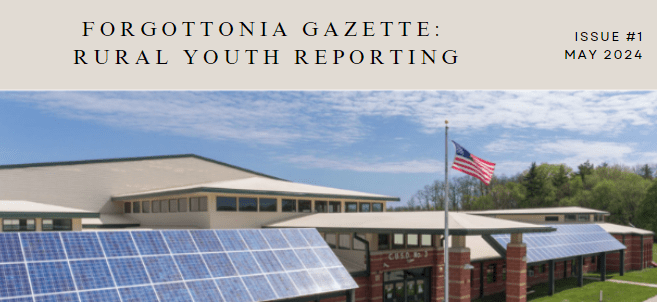
Articles on this edition
- “Play Fair or Pay the Price” by Grace Yaste and Allison Markley
- “Exploring Bias in News Reporting” by Amber Cannon
- “Exploring the Impact of Cuba-Lewistown Sports Co-Ops” by Lexi Mance
- “Supporting Students With FND: A Call to Action for Schools” by Corbin Fuller
- “The Cuba Journal: What Cuba’s Historical Newspapers Teach Us About Our Past” by Garrett Brooks
- “The Bushnell Shooting and the Rise of Teen Violence” by Madison Richbark
- “It’s Game Day: Balancing Sports and Mental Health for Student Athletes” by Kixon Bowles
6 Facts About Rural News Deserts
- #1 – Newspapers are vanishing at a rapid rate. Since 2005, the U.S. has lost more than ¼ of its newspapers and is on track to lose ⅓ by 2025.
- #2 – More than ⅕ of the nation’s citizens live in news deserts –with very limited access to local news.
- #3 – Most communities that lose newspapers and do not have an alternative source of local news are poorer, older and lack affordable and reliable high-speed digital service that allows residents to access the important and relevant journalism. Instead, they get their local news from the social media apps on their mobile phones
- #4 – The largest 25 chains own a third of all newspapers, including 70 percent of all dailies. Their business strategies and decisions continue to shape the local news landscape
- #5 – The loss of local journalism has been accompanied by the rise in a spread of misinformation and disinformation, and even declines in voter participation
- #6 – The loss of local journalism presents a major challenge for our democracy and communities like ours are finding creative ways to address this loss
This newsletter is our attempt to do address our news desert reality. What ideas do you have? What other impact is our news deserts having on small communities and our nation as a whole?
 The Forgottonia Project