
“I couldn’t wait to leave, but then I couldn’t wait to come home.”
Lori Noe
ON THIS EPISODE
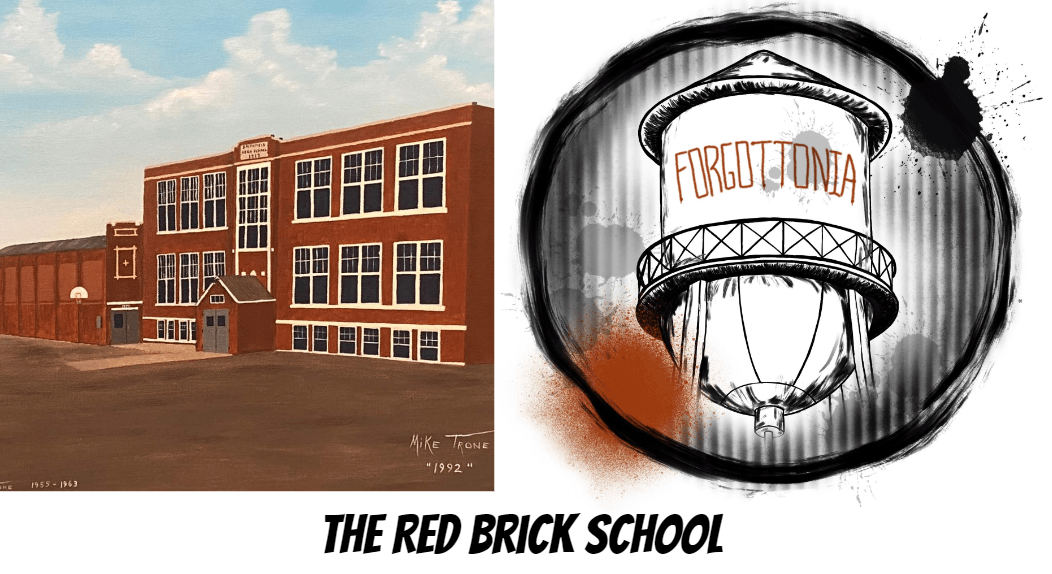
As part of our Oral History in Forgottonia series, Cuba High School juniors Cooper Leonard and Sam Thum explore the history and impact of the old Red Brick School in Smithfield, Illinois. Like many small towns, the school in Smithfield (known as the Red Brick School) closed decades previously and consolidated with Cuba which is located about 7 miles east of the town.
Cooper began this project last year by sharing his interview with retired principal Daryle Coleman. Last year Cooper focused on rural schools closing and consolidating throughout our region. This year he wanted to better understand the historic and cultural impact of one school in particular: the historic Red Brick School in his hometown of Smithfield, Illinois. To do this work, he recruited fellow student and Smithfield native, Sam Thum. Despite juggling several responsibilities, both students have spent many hours researching and interviewing people with unique perspectives related to the Red Brick School.
Part 1 of their project, they speak with local legend Lori Noe, a longtime Smithfield resident and former elementary student at the Red Brick School. Lori is a wonderful mother, friend, and teacher. She is universally loved in the community and currently serves as a program assistant in the Cuba School District.

Essential Questions
- What was it like to be a student at the Red Brick School?
- How did the closing of the school impact the community, and you personally?
- Why is the Red Brick School so important to Smithfield even though it’s been closed for decades?
- What do you miss about the way school was done compared to the way we do school now?
- What are the challenges of sustaining the school building today? Why should young people who never went to the school be involved in preserving it?
Cooper Leonard & Sam Thum BIO
Cooper Aaron Eugene Leonard is a junior at Cuba High School and the son of Randy & Meghan Leonard. Cooper is involved with history club, drama club, track and field, dance, and he works as a student technology specialist for CHS. He enjoys soccer, baked potatoes, sleeping, hanging out with friends, and following his curiosity. After high school, Cooper is thinking about going to Bradley University to get a degree in computer science or engineering.
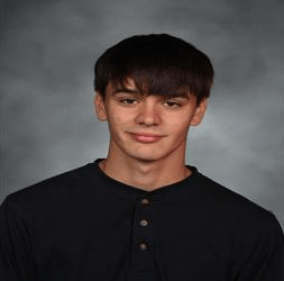
Samantha Marie Thum is a junior at Cuba High School and the daughter of Garrett and Karen Thum of Smithfield, IL. Sam is involved with student Council, National Honor Society, FCCLA, Scholastic Bowl, Volleyball, Dance, Softball, Track, Art Club. She enjoys listening to the Beatles and keeping herself busy. After high school, Sam plans on going to college and getting a degree in Aerospace Engineering or Astrophysics.
ABOUT THE PROJECT
Our ORAL HISTORY of FORGOTTONIA series is part of the NCHE Rural Experience in America grant in partnership with the Western IL Museum, and the Western IL University Archives. In 2021, the National Council for History Education (NCHE) recruited teachers nationwide to participate in free and open professional development that occurred asynchronously and synchronously online, focusing on rural history and historical inquiry using Library of Congress sources. Teachers traveled to Norman, Oklahoma to collaborate with a community partner selected from their hometown to create a public history project.
These community-based, service-learning public history projects enable students to investigate their local and regional histories deeply and to connect their own histories to the larger human experience. A key purpose of this project is to link rural communities and their histories to national narratives and primary source collections, and the targeted focus of this proposal provides an avenue for such purposeful connections.
Our project, The Oral History of Forgottonia, is one of several throughout the country featured by the NCHE. To learn about other projects featured by this grant, check out this list and visit the links at the bottom of this post.
SOURCES
 The Forgottonia Project
One Reply to “”