
At The Forgottonia Project, we believe the best learning happens through doing, creating, and connecting to real-world challenges.
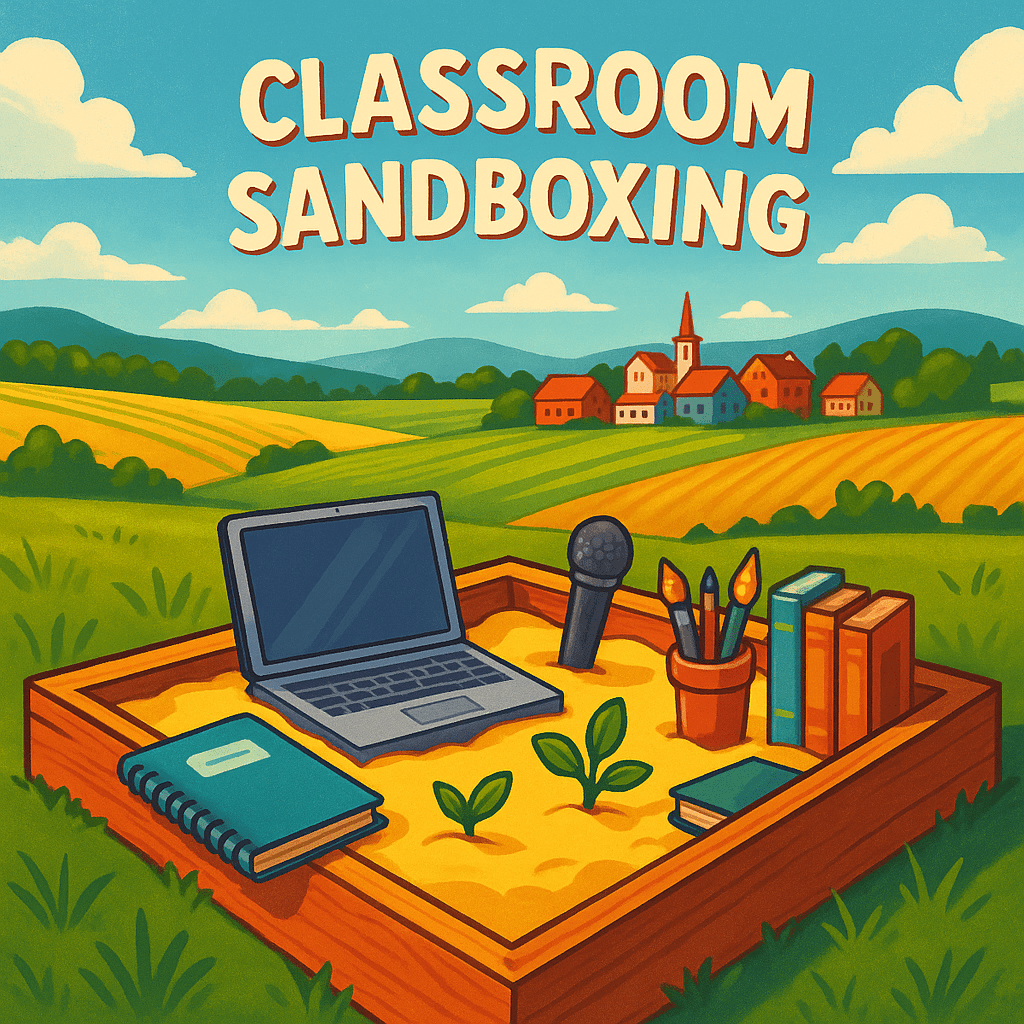
That’s why we’re passionate about a model we call Classroom Sandboxing.
What is Classroom Sandboxing?
Classroom sandboxing is a project-based, inquiry-driven approach where students take ownership of their learning. They aren’t creating something just for a teacher or a grade — they’re creating for a wider community audience.
In a sandboxed classroom, students tackle real questions — ones that matter to them. These questions might connect to local history, social issues, rural innovations, or any topic that ties into the subject, unit, or broader framework teachers are working within. Rather than being confined to a narrow assignment, students are encouraged to pursue curiosities and challenges they are genuinely interested in exploring. This flexibility means that inquiry can live inside any discipline — history, science, language arts, career and technical education, or the arts — and can be adapted to fit a wide range of standards and learning goals.
Throughout the process, students receive feedback not just from teachers, but also from community partners, historians, experts, and even peers. They then present what they’ve learned in a medium of their choice: podcast episodes, oral histories, documentaries, public exhibits, artwork, digital stories, and more.
The teacher’s role shifts from director to facilitator — helping students refine their questions, find quality sources, connect with mentors, and reflect on their learning throughout the messy, creative process.
Why It Matters
Learning in a sandboxed environment is intentionally messy. Students come with a wide range of skills — some might struggle with research, communication, or even confidence. But when students are given space to wrestle with ideas, take creative risks, and share real work with real audiences, deep learning happens.
Researcher John Hattie has shown that some of the most effective influences on student learning include:
- Feedback (effect size: 0.70) — which students receive constantly as they revise their projects, test new ideas, and reflect on peer and mentor input.
- Student self-efficacy (0.92) — the belief that they can succeed. When students lead their own projects, solve complex problems, and make their learning public, their confidence soars.
- Teacher clarity (0.75) — When students know the “why” and “how” of their work, they stay focused and driven.
- Problem-based learning (0.68) — When students tackle real issues like historical memory, rural revitalization, or policy change in their hometowns.
- Goal setting (0.68) and collaboration (0.59) — built into every step of capstone projects where students brainstorm, co-create, and present their work with others.
- Transfer of learning (0.86) — students apply what they’ve learned across contexts: like history to civic action or research to real-world interviews.
When students see that their voices matter and their work can impact the community, they develop critical thinking, creativity, collaboration, and a stronger sense of belonging — skills that matter far beyond any classroom walls. When students are invited to ask their own questions and create real work for real audiences, it leads to deeper meaning, greater engagement, more joy, and ultimately, a stronger sense of purpose in their learning journey.
Why It Matters in Rural Places Like Forgottonia
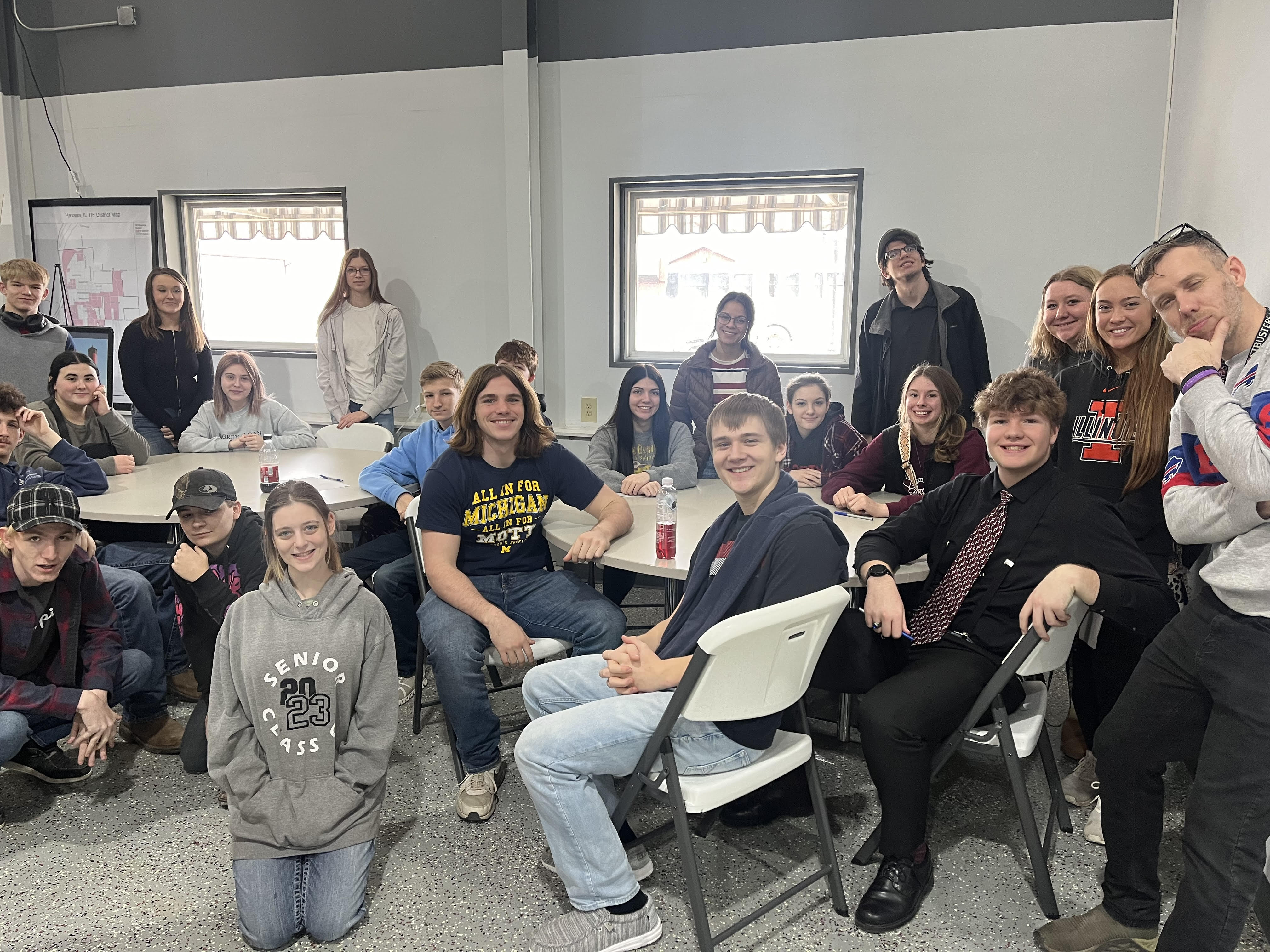
In rural schools, where resources can be limited and traditional pathways often feel distant, sandboxing offers something powerful:
- It honors students’ voices.
- It roots learning in the realities and possibilities of their own communities.
- It builds bridges between schools, towns, and the wider world.
Forgottonia’s history reminds us that change often starts small — one voice, one idea, one connection at a time. Through classroom sandboxing, we hope to inspire students to see themselves not just as learners, but as storytellers, problem-solvers, and future community leaders.
Our 7-Part Inquiry & Project-Based Learning Process
Step 0. Know Yourself & Set Goals
Competencies: Self-Awareness, Goal Setting, Communication, Learner Agency
Before we can even talk about projects or content, we need to understand the humans in the room — and help them understand themselves.
This step helps students develop self-awareness and learner agency, two competencies that are foundational for 21st-century success. In a world where lifelong learning is essential, students must be able to identify their strengths, areas for growth, learning preferences, and communication styles. They also need the ability to set, pursue, and revise personal goals — both academic and emotional.
This work begins with relationship-building. Before we get on the metaphorical bus of learning together, we want to know each other — and ourselves. As Forrest Gump says, “Now we ain’t strangers anymore.”
CLASSROOM TIPS:
- ✅ Start with simple self-discovery tools: Use personality or learning style inventories (like 16 Personalities, or multiple intelligences).
- ✅ Use short reflection prompts: Start class with journal questions like, “What helps me focus?” or “When do I feel most confident at school?”
- ✅ Build classroom trust: Try low-stakes group challenges or “get to know you” circles to practice speaking, listening, and being seen. One great activity is classroom speed dating — where students rotate through short, timed conversations. Give them prompts like:
- Ask for advice
- Ask for a favor
- Give a compliment
- Share something you’re proud of
Afterward, reflect as a class: How well did you listen? What made it easy or hard to connect? These routines strengthen empathy, communication, and confidence — all essential before diving into deeper work.
Step 1. Build Understanding Through Direct Instruction
Competencies: Content Literacy, Foundational Knowledge, and Critical Thinking
Once students know who they are and what they’re aiming for, it’s time to equip them with the knowledge and tools they’ll need to explore meaningful questions and challenges.
This step centers on content literacy and foundational knowledge, which are essential for informed citizenship and deeper inquiry. Students need enough context and background to ask good questions, think critically, and engage with complexity.
Step 1 is where we provide direct instruction — not lectures, but active, multimedia-rich experiences. This is where strong, engaging teaching comes in. Before we unleash students into creative freedom, we make sure they have the background knowledge and foundational concepts they need — and we do that through thoughtful, direct instruction. This is the grounding point. Without it, authentic student-driven work doesn’t have the roots it needs.
We also consider Depth of Knowledge (DOK). Real learning happens when students go beyond recall — when they explain ideas, justify decisions with evidence, and engage in rich, reflective thinking. DOK gives us a framework for that. As they go through their projects, students are expected not just to do the work but to communicate what they learned and why it matters — through writing, speaking, and showcasing their thought processes.
CLASSROOM TIPS:
- ✅ Start with a compelling question, image, or story that hooks students
- ✅ Use short videos or primary sources with guided questions.
- ✅ Integrate tools like Nearpod, Padlet, Edpuzzle, or Canva to make direct instruction interactive & reflective
Step 2. Ask Great Questions & Choose a Medium
Competency: Curiosity & Media Literacy
Curiosity drives learning. In Step 2, students craft authentic, meaningful questions — the kind they’re genuinely excited to pursue. We treat questioning not just as a skill, but as an art. Students explore open-ended, real-world problems, drawing from personal experience or local community needs.
Then comes the choice: How will they share what they find? A podcast? A photo essay? A short film, a live presentation, a webcomic? Students pick the format that fits their voice and purpose — and in doing so, they build media literacy.
We support students in exploring different forms of expression so they can match medium to message. In a world flooded with media, being able to tell a story with clarity and purpose is a vital 21st-century competency.
CLASSROOM TIPS:
- ✅Introduce QFT Method (Question Formation Technique) from the Right Questions Institute, with a fun, low-stakes topic first to build confidence.
- ✅Be sure student questions pass the B.E.G.S. test — going Beyond an Easy Google Search.
- ✅Anchor the project with a real showcase date to create urgency.
- ✅Offer flexible grouping: solo, partners, or small teams — whatever fuels engagement.
Pro Tip: Teachers can incorporate AI as a “thought partner” during this stage to help students brainstorm questions, plan inquiries, and organize their ideas visually.
Step 3. Research Deeply
Competency: Critical Thinking & Information Literacy
Next, students dive into research using a variety of sources — primary and secondary. They learn how to evaluate information for reliability, bias, and relevance, connecting their inquiry to broader disciplines where appropriate.
This is a great time to embed important mini lessons on information literacy, media literacy, and research methods. If possible, offer opportunities for real-world experiences such as connecting with researchers or visiting historical sites.
Key questions we ask:
- How do we know what we know?
- What makes information trustworthy?
- How do we position our research within a discipline?
CLASSROOM TIPS:
- ✅ Develop News Media & Information Literacy Skills:
- Utilize ready-made digital tools like Checkology, Common Sense Media, iCivics and more to develop healthy skepticism in students about the sources of information
- ✅Create a Research Passport
- Give students a checklist of different types of sources they must use (e.g., 1 primary source, 1 secondary source, 1 interview, 1 database article, 1 local source, 1 creative/visual source, etc.). Make it like a scavenger hunt.
- ✅Digital Field Trip
- If an actual trip isn’t feasible, bring a historical site or museum to the classroom using virtual tours, Google Earth, or photo archives. Let students analyze the primary sources they “visit.”
- ✅Anchor Research to a Driving Question:
- Continuously bring students back to the question: How do we know what we know? Ask them to build evidence-based answers using notes and annotated sources.
Step 4. Interview Experts
Competency: Civic Communication & Relationship Building
Students connect with people beyond the classroom — whether it’s via Zoom, email exchanges, or in-person interviews. They develop soft skills like scheduling, communicating with adults, active listening, and respectfully challenging ideas when needed.
Interviewing experts helps students see themselves as part of a broader conversation and often deepens their inquiry.
Interviewing builds relationship skills and helps students realize that knowledge doesn’t only live in books — it lives in people. This step nurtures a powerful shift: students move from being passive recipients of information to active participants in a shared civic dialogue.
CLASSROOM TIPS:
- ✅ Use a Roleplay or Simulation First
- Practice mock interviews in class before students contact experts. Assign roles: interviewer, interviewee, notetaker, timekeeper. Debrief what went well.
- ✅Build a “Community Experts Rolodex”
- Start a shared Google Sheet of willing local experts: librarians, veterans, business owners, park rangers, etc. Ask your school or community to contribute names.
- Or, have students identify experts from podcasts, authors, or LinkedIn to reach out to with a teacher-reviewed script.
- ✅Teach Email Etiquette as a Writing Skill
- Use real-world email templates and have students write and peer-review their messages before hitting send. Emphasize clear subject lines, respectful tone, and a brief explanation of their project.
- ✅Create an Interview Prep Guide
- Give students a template with fields: Background research on expert, top 3 questions, tech setup checklist, note-taking strategy, and follow-up plan.
- Remind them: a great interview is a conversation, not an interrogation.
- ✅Reflection Post-Interview
- After the interview, have students write or record a quick reflection:
- What did I learn that surprised me?
- How did this deepen or challenge my research?
- How did it feel to talk to someone outside of school?
- After the interview, have students write or record a quick reflection:
Step 5. Revise with Feedback
Competency: Growth Mindset & Iteration
In Step 5, students practice one of the most powerful skills of all: how to improve. They seek feedback from peers, teachers, and even community experts, using it to refine and strengthen their work—not just to check a box, but to make it more meaningful. This step builds resilience, adaptability, and time management, helping students see revision not as failure, but as the engine of real learning and growth. As Peter Drucker said, “Follow effective action with quiet reflection. From the quiet reflection will come even more effective action.”
CLASSROOM TIPS:
- ✅ Create a Feedback Culture: Foster a classroom environment where feedback is constructive and seen as a valuable tool for growth. Remind students that feedback is not criticism but a chance to improve. Use peer reviews, self-assessments, teacher and community feedback to show that revision is part of the learning process, not a sign of failure.
- ✅Use the “Two Stars and a Wish” Method: When providing feedback, encourage students to identify two things that are going well (stars) and one area for improvement (wish).
- ✅Time for Reflection: After feedback is given, give students time to reflect on the feedback and revise accordingly. Encourage them to ask questions about the feedback to deepen their understanding. You might use journals or quick reflection prompts like: “What part of your project changed the most after receiving feedback, and why?”
Step 6. Showcase Proudly
Competency: Public Speaking & Purposeful Design
Great work deserves an audience. In Step 6, students present their final projects to real people — peers, families, school boards, civic groups, or online platforms. Whether through gallery walks, museum-style exhibits, podcast series, or live forums, students don’t just display their work — they own it. They speak with purpose, design with intention, and connect their learning to the world beyond the classroom. This step fuels engagement, raises the bar for quality, and reminds students: your voice matters, and your work has a place in the real world.
CLASSROOM TIPS:
- ✅Design Authentic Audiences: Create opportunities for students to present their work to a wider audience beyond the classroom. This could be a gallery walk, a virtual showcase, or presenting to a local organization or school board. The key is to make students feel that their work is meaningful and relevant.
- ✅Practice Presentation Skills: Before the big presentation, give students mini-lessons or practice sessions on public speaking. Topics might include posture, speaking clearly, making eye contact, and structuring a compelling narrative. Even practicing in front of a small group of peers can help students gain confidence and refine their delivery.
- ✅Incorporate Technology: Use digital platforms like YouTube, podcasts, or websites where students can display their work. These platforms give students a chance to share their creations with an even broader audience, enhancing the sense of purpose and pride in their work.
- ✅Engage the Audience: Have students think about their audience when preparing their projects. What will engage and inform their audience? How can they connect emotionally or intellectually?
Step 7. Reflect on Learning
Competency: Metacognition & Self-Assessment
This final step isn’t just about wrapping things up — it’s a pause to look back and learn. students reflect on what went well and what could be improved, connecting their project work to personal growth. Whether through writing, discussion, or presentations, they consider questions like: What did I learn? What challenged me? How did I grow?
This reflection becomes the heart of the project — not just a summary, but a springboard. The goal isn’t just a polished product; it’s a more confident, capable learner ready for what’s next.
CLASSROOM TIPS:
- ✅Use Reflection Tools: Encourage students to reflect on their learning process using frameworks like the “What Went Well / Even Better If” (WWW/EBI) method. This helps students identify both strengths and areas for growth. You could also ask them to journal about their project journey and how their thinking evolved.
- ✅Peer Reflections: Incorporate peer-to-peer reflection. Have students discuss what they learned from each other’s projects, what inspired them, and what challenges they noticed their peers overcoming.
- ✅Create a Final Reflection Portfolio: Collect reflections, feedback, and final projects in a portfolio that students can look back on. This gives them a tangible way to track their progress over time and see how they’ve developed as learners.
 The Forgottonia Project